Size: where the nanoscale changes everything
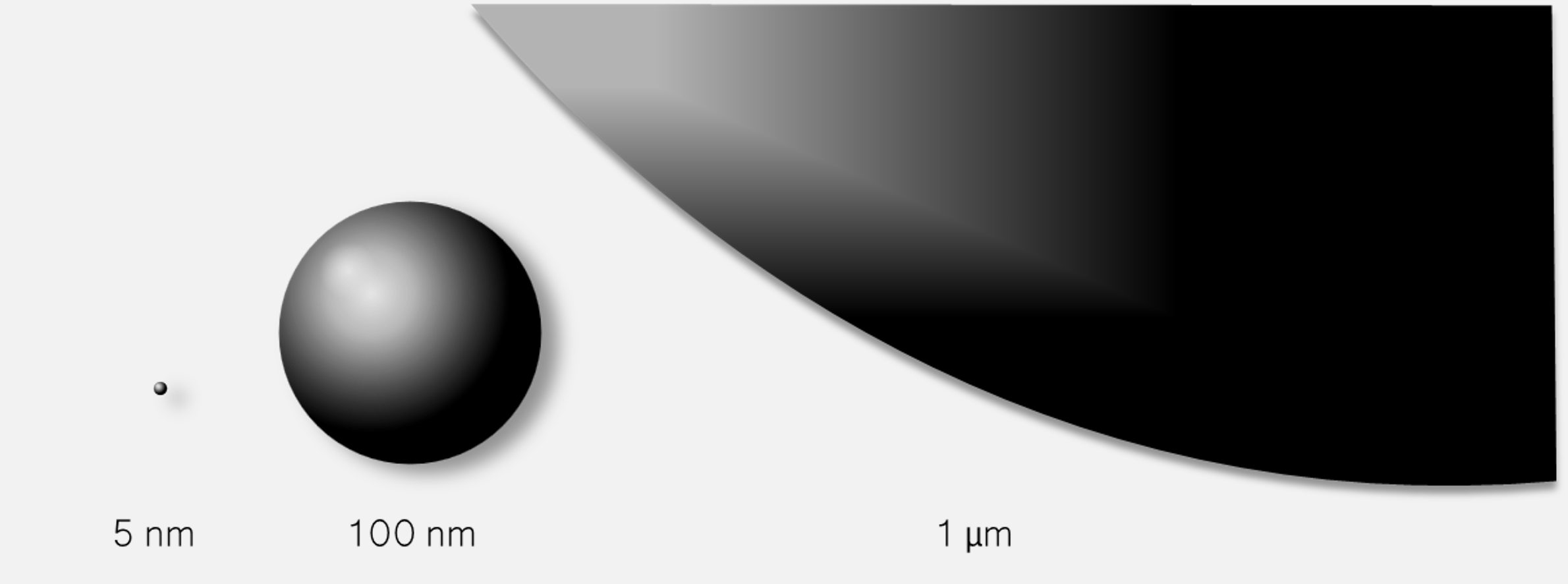
Size is certainly the most defining characteristic of nanoparticles. While the nano- prefix refers to the unit of length of one nanometre (10⁻⁹ m, or one billionth of a meter), nanomaterials are generally defined as having at least one dimension smaller than 100 nm.
The reason behind this 100 nm threshold is that, once crossed, several physicochemical properties of matter begin to deviate progressively from bulk phase behaviour, and quantum effects start to emerge.
Colour changes. Electrical and magnetic properties are enhanced. Hardness increases. Inert materials become efficient chemical catalysts. Light scattering becomes negligible.
Beyond the intricacies of quantum mechanics, small size also has clear geometrical implications. The specific surface area, that is the total surface area of all nano-objects making up one gram of material, typically reaches hundreds of m² per gram. This means that one gram of nanoparticles can interact with 100 m² of a polymer matrix, polluted water, or reactive gas.
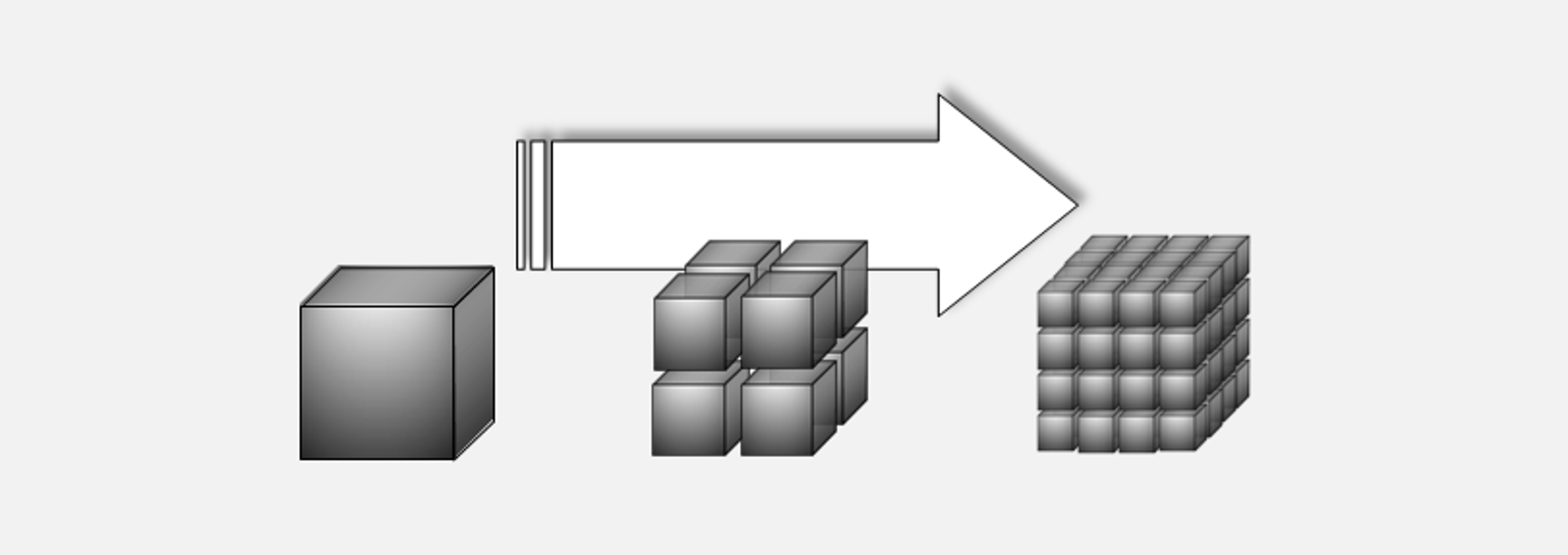
A nano-object is comparable in size to many biological organelles, micropores and microtubules, gaining access to biochemical environments that would otherwise be inaccessible. On surfaces, it can infiltrate deeper crevices, fill smaller voids, and pass through tighter channels. More individual objects can be arranged per unit volume or surface area, exponentially increasing the density of stored information, as evidenced by the remarkable growth of the electronics industry.
Below a certain size range, particles also become less prone to settling, as gravitational forces are counterbalanced by diffusion towards regions of lower concentration, a phenomenon inversely proportional to particle size. When size is properly engineered, the resulting dispersion can be indefinitely stable.
Size can be measured by a variety of direct and indirect techniques, including electron microscopy, X-ray diffraction and dynamic light scattering. Optical techniques are of limited use, as nanoparticles are approximately one order of magnitude smaller than the wavelength of visible light.